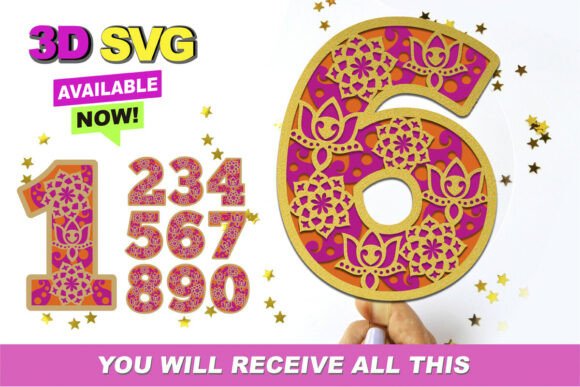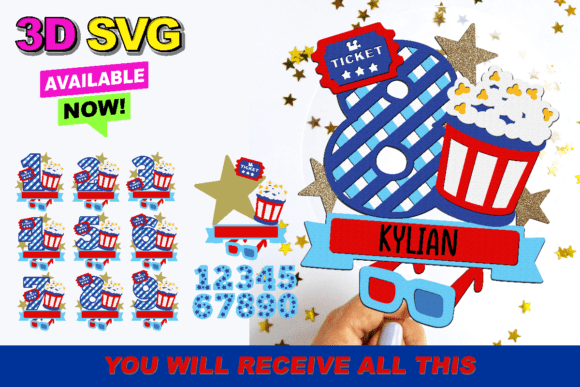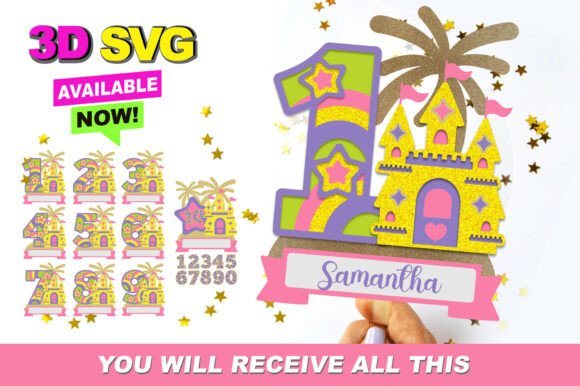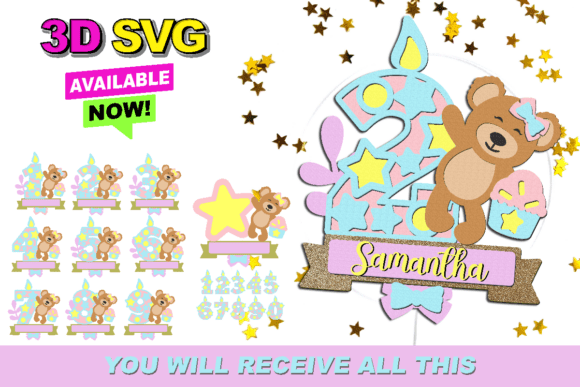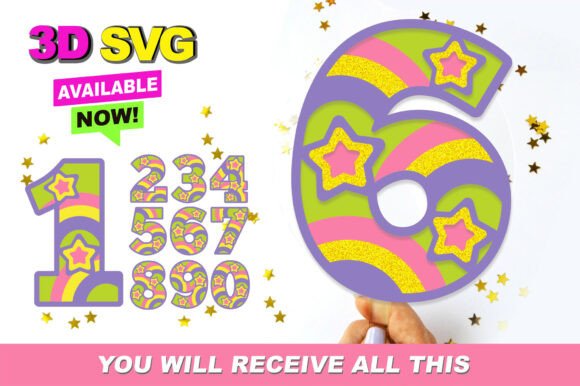
Rainbow Numbers 3D SVG
First Impressions: Playful, Bold—and Surprisingly Versatile
Opening Rainbow Numbers 3D SVG feels like unboxing a set of cheerful building blocks—vibrant, dimensional, and full of kinetic energy. The numbers aren’t flat silhouettes; they’re sculpted with subtle highlights, soft shadows, and rounded edges that suggest depth without overcomplicating the shape. As an embroidery designer who’s stitched everything from delicate monograms to dense floral motifs, I immediately noticed how this collection walks a fine line: it’s whimsical enough for baby onesies and nursery decor, yet clean and confident enough to hold up on boutique sweatshirts or embroidered tote bags for a local coffee shop.
A Real-World Test: Stitching “7” onto a Linen Kitchen Towel
Last week, I prepped a small-batch holiday gift set—custom tea towels for friends, each featuring a single rainbow number representing their birth month. I chose the “7” from Rainbow Numbers 3D SVG and stitched it onto medium-weight natural linen using a 4″ hoop. The result? Crisp satin-stitched outlines, smooth fill-stitch gradients that mimicked the 3D illusion beautifully, and zero puckering—even without heavy cutaway stabilizer. Customers later told me the towel felt “handmade but polished,” not crafty-cute in a way that reads as amateur. That’s the quiet strength of Rainbow Numbers 3D SVG: it elevates the handmade product without demanding perfection from the stitcher.
Where It Shines (and Where It Needs Thought)
Rainbow Numbers 3D SVG excels in projects where personality meets practicality:
- Custom apparel: Works especially well on sweatshirts and structured tote bags—the 3D effect reads clearly even at 3–4 inches tall, and the bold shapes prevent thread loss on textured fleece or canvas.
- Baby embroidery: Soft curves and generous spacing between elements make it forgiving on knit onesies and burp cloths, especially when paired with gentle tear-away stabilizer.
- Embroidered patches: The defined edges and minimal internal detail translate cleanly into sew-on or iron-on patches—ideal for craft fairs or Etsy sellers bundling digital embroidery files with physical patch kits.
- Holiday and nursery decor: On pillow covers or framed wall art, the color-blocked rainbow palette feels joyful but not juvenile—perfect for gender-neutral baby showers or modern kitchen branding.
Careful Use Cases: Know Before You Hoop
This isn’t a one-size-fits-all embroidery file—and that’s a good thing. Its charm depends on thoughtful placement:
- Small hoop sizes (under 3″): Avoid scaling below ~2.5″. Fine interior highlights blur, and satin-stitched edges can lose definition on tight curves.
- Stretchy or thin fabric: Skip lightweight jersey or rayon challis unless you add light fusible + tear-away stabilizer. The design’s volume reads best on stable substrates.
- Dark fabric backgrounds: Test thread colors carefully. Bright rainbow threads pop on black cotton, but avoid white or pale yellow fills—they’ll get visually swallowed without contrast stitching.
- Curved surfaces (caps, beanies): The 3D illusion holds up better than most numeric designs, but keep placement centered on the front panel—not the crown or curve of the bill—where distortion is minimal.
- Frequent-wash items: Reinforce satin-stitched outlines with a second run if using on kids’ clothes or tea towels. The design’s density is moderate, not heavy—so durability relies partly on your thread choice and stabilizer pairing.
What It Adds to Your Craft Business—Beyond Aesthetics
As someone who advises Etsy sellers and small shop owners, I’ve watched Rainbow Numbers 3D SVG quietly lift perceived value. When used in a cohesive set—say, “1” through “12” on matching baby milestone blankets—it signals intentionality and brand polish. Buyers don’t just see numbers; they see celebration, growth, and care. That translates directly to higher cart conversion and fewer “Is this machine embroidered?” questions—because the finish looks intentional, not generic.
For digital product sellers, this collection works double duty: it’s strong as a standalone embroidery file, but also functions beautifully in printable mockups. I layered it over neutral sweatshirt templates in grayscale, and the dimensional shape still read clearly—making it ideal for clean, professional listings without needing complex photo shoots.
Practical Designer Notes Before You Stitch
Before adding Rainbow Numbers 3D SVG to your next project—or listing it in your shop—take these five minutes:
- Test on scrap fabric first, using your exact thread colors and stabilizer combo. Watch how the satin-stitched curves behave on your go-to cotton vs. your stretchiest knit.
- Review stitch density in your embroidery software. If it’s unusually high (especially in shadow zones), consider simplifying minor fills—this isn’t a logo that needs archival precision, but a friendly graphic meant to be seen, not scrutinized.
- Confirm hoop size compatibility. While it scales well, some versions may push limits on compact machines—check your machine’s max hoop dimensions before finalizing layout.
- Inspect corners and inner angles at 200% zoom. Are there any tiny floating stitches or overly tight turns? A quick manual cleanup saves rehooping time later.
- Verify licensing terms before selling finished embroidered items or bundling Rainbow Numbers 3D SVG with other digital products. Since it’s marketed for Silhouette Studio and Cricut Design Space use, confirm whether commercial embroidery rights are included—or if you’ll need separate permission for resale of stitched goods.
Final Thought: Not Just Numbers—A Tone Setter
Rainbow Numbers 3D SVG doesn’t shout. It invites. It’s the kind of embroidery file that makes a simple tote bag feel like a curated gift, a baby cap feel like heirloom quality, and a holiday tea towel feel like something you’d frame—not fold away. For embroidery designers and craft business owners, it’s less about technical novelty and more about emotional resonance: clear, confident, and quietly joyful. Used with attention to fabric, stabilizer, and scale, it becomes more than a machine embroidery design—it becomes part of your signature handmade product voice.