Turkey Candy Holder: 3D SVG & Shapes for Seasonal Branding
When I unzipped the Turkey Candy Holder bundle for a local confectionery client last week, I immediately recognized it as one of those rare seasonal assets that bridges playful charm with genuine packaging utility. The collection lands somewhere between festive whimsy and structured decorative precision, a balance that not every holiday-themed graphic design asset manages to pull off. For small food businesses chasing that warm, approachable Thanksgiving shelf presence without veering into generic clipart territory, this one deserves a closer look.
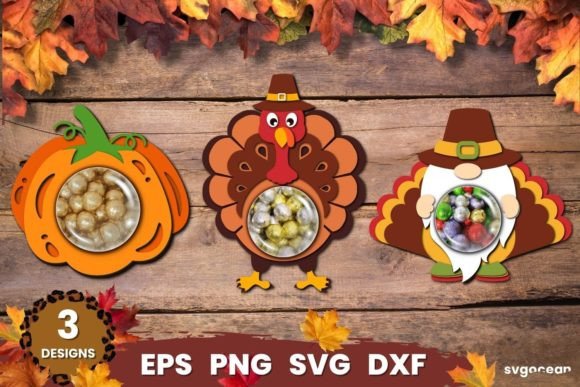
The silhouette reads clearly even at thumbnail size, which is the first test I always run. The turkey shape has enough personality to feel intentional, yet remains simple enough to function as a brand identity accent rather than a distraction. There is a handcrafted sensibility woven into the contours that suggests a friendly, family-oriented brand personality. It would sit comfortably on the packaging of a farmstand bakery, a homemade caramel business, a seasonal pop-up shop, or a boutique candy brand that leans into tradition with a contemporary edge.
First Impressions and the Mood It Creates
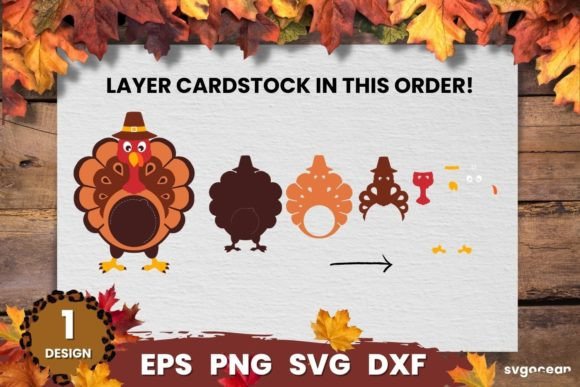
Opening the folder reveals a cleanly organized collection of eight SVG files, eight PNG variations, and complementary EPS and DXF formats. The 3D SVG structure is what elevates this beyond flat decoration. When assembled, the dimensional aspect creates a subtle shadow play that adds perceived value to product photography and mockups. There is something inherently tactile about a three-dimensional candy holder on a package front, it signals care and consideration before the customer even reads a single word.
The mood leans festive without being loud, friendly without tipping into childish territory. For a small business owner selling hand-poured candles wrapped in autumn packaging, a chocolatier preparing seasonal gift boxes, or a bakery designing Thanksgiving pastry sleeves, this asset introduces an element of surprise. The dimensional quality makes it suitable for brands that want to project warmth, approachability, and attention to detail. It does not feel corporate, sterile, or mass-produced, which is precisely what local artisan businesses need when competing with supermarket shelf presence.
Where This Asset Strengthens Real Branding Projects
In my workflow with the confectionery client, we tested the Turkey Candy Holder across multiple touchpoints. The strongest application by far was on product packaging, specifically as a decorative focal element on box tops, window bag headers, and hang tags. When printed on kraft stock with a subtle gold foil overlay, the 3D shape introduced just enough dimensionality in photography to make the product feel gift-ready without additional wrapping.
Beyond packaging, the PNG files proved invaluable for social media graphics and marketing visuals. Placing the turkey graphic beside hand-lettered promotional text created an instantly cohesive seasonal campaign. We used it on Instagram story templates, Thanksgiving pre-order announcements, and email newsletter headers. The transparent backgrounds meant it layered cleanly over textured photography, product flat lays, and solid color blocks alike.
For business owners who handle their own Canva template design or manage in-house branding, the file variety removes friction. The SVG formats allow full vector editability for scaling without quality loss, making them suitable for everything from small product labels to large window signage. The included DXF file opens doors for physical display elements, countertop signage, or even laser-cut wooden accents that echo the brand across physical retail spaces.
Practical Applications Across Different Business Types
The obvious fit here is food and confectionery, but I want to be specific about the range. A local honey producer could use the turkey silhouette as a seasonal jar label accent. A handmade soap business might incorporate it into autumn collection packaging, letting the 3D SVG structure add dimension to a simple kraft box. Florists preparing Thanksgiving centerpiece bundles could use it on enclosure cards. Even a children's boutique releasing a limited holiday clothing line could adapt it for hang tags and promotional postcards.
The Shapes classification makes sense upon closer inspection. The fundamental form is universally recognizable, yet it avoids the overly detailed, literal interpretation that limits versatility. This abstraction is what allows it to complement both rustic, homespun branding and cleaner, modern seasonal presentations. I could see it working equally well beside a serif typeface on an elegant chocolate box or paired with bouncy handwritten scripts on a bake sale flyer.
Testing Across Typography and Visual Hierarchy
One exercise I always run with decorative assets is placing them beside different font categories to gauge compatibility. Here, the turkey holder performed admirably with serif fonts, the curves of the design echoed traditional letterforms nicely, creating a classic Thanksgiving aesthetic. Paired with sans serif fonts, it provided the organic contrast that keeps minimalist layouts from feeling cold. Alongside script fonts and handwritten fonts, the combination felt intentionally crafted, like a custom illustrated brand mark rather than two separate elements colliding.
The only instance where I noticed tension was with highly condensed display fonts at very small sizes. The decorative nature of the turkey shape benefits from breathing room. When squeezed into tight spaces with bold, narrow lettering, the visual priority became unclear. This is not a flaw in the asset itself, it is a visual hierarchy reminder that decorative elements need deliberate placement, not afterthought positioning.
Using the Asset in Commercial Design Work
A critical point for any designer working with purchased assets on client projects is commercial licensing. Before integrating the Turkey Candy Holder into packaging that will be printed by the thousands or applied to product labels for retail sale, verify the commercial terms explicitly. The bundle format, eight SVG options plus high-resolution PNGs, suggests intent for professional use, but license confirmation protects both the designer and the small business client from complications down the road.
For local business owners purchasing the asset directly and handing it to their designer, providing the complete ZIP file ensures the design professional has access to every format needed. The EPS file supports legacy workflows, the SVGs satisfy modern vector requirements, and the PNGs allow quick placement in product mockups without software compatibility concerns. Mentioning Cricut Design Space and Silhouette compatibility in the product notes signals that this asset also serves makers creating physical packaging embellishments, window decals, or in-store displays, extending its value beyond purely digital application.
Where Caution Improves the Outcome
Not every branding situation calls for a dimensional turkey. For luxury minimalist brands that rely on extreme restraint, even a subtle seasonal accent can dilute the core identity. If the brand language centers on stark whitespace, monochromatic palettes, and editorial austerity, a festive 3D shape, no matter how tasteful, may feel like a departure rather than an enhancement.
Similarly, for very small labels with ingredient lists, nutritional panels, and legal information competing for space, adding this asset could create visual crowding. The dimensional aspect looks best when given room. I learned this firsthand when testing it on a 2-inch round jar label: the turkey shape, while charming, fought against the required regulatory text. The solution was scaling it down and using it as a subtle corner accent rather than a central feature.
Other situations to approach thoughtfully include low-contrast backgrounds, where the silhouette may lose definition, and designs where the turkey competes with other decorative elements for attention. It thrives when treated as a deliberate focal point or a considered supporting detail, not as one of many scattered embellishments.
Print Testing and Production Considerations
Before committing to a full packaging run, I always recommend printing the SVG design at actual size on the intended substrate. Kraft paper absorbs ink differently than coated cardstock, and the fine details in some turkey variations may need slight thickening for uncoated surfaces. Testing in black and white reveals whether the shape maintains its integrity without color differentiation, a useful check for businesses that may use single-color printing for cost efficiency.
Reviewing PNG transparency edges at 100% zoom is another step worth taking. The files in this bundle rendered cleanly in my tests, with no visible artifacts or rough edges against dark backgrounds. For social media managers layering these graphics over photography in Canva or Adobe Express, transparent PNG quality directly impacts how professional the final composition appears. A poorly masked edge instantly cheapens an otherwise polished seasonal campaign.
For businesses planning printable designs, such as Thanksgiving menu inserts, promotional postcards, or seasonal thank-you cards, the vector formats provide the crisp output needed for professional printing. I sent one of the SVG variations to a local print shop for a short-run postcard test, and the result held up beautifully at A6 size with no pixelation or scaling artifacts.
Building Seasonal Campaigns With Cohesion
One of the most practical strengths of this digital product is how it unifies disparate brand touchpoints under a single seasonal visual. The same turkey shape that appears on a product label can reappear on the website banner, the social media announcement, the email signature graphic, and the physical store signage. This repetition builds brand recognition rapidly during a short seasonal window.
For the confectionery client, we created a cohesive Thanksgiving campaign using the turkey holder on box packaging, Instagram posts, a limited-time website hero image, and printed enclosure cards tucked inside each order. Customers began associating the shape with the brand's seasonal offering within days. When a decorative asset can drive that level of recognition, it transitions from mere decoration to a functional branding tool.
Small business owners managing their own social media graphics will appreciate that the PNG files drop directly into Canva with no background removal needed. This accelerates content creation during the hectic weeks leading up to holiday sales, when time spent editing assets cuts directly into marketing reach and order fulfillment.
Competitive Differentiation Through Details
Seasonal packaging is saturated territory. Walk through any gift shop or farmers market in November, and turkeys, pumpkins, and autumn leaves appear on nearly every surface. What makes the difference is execution quality, and that is where the dimensional aspect of this 3D SVG collection provides an edge. Flat clipart feels expected. A shaped element with perceived depth suggests that the brand invested in presentation, which subconsciously translates to perceived product quality.
I encourage business owners to study competitor packaging before finalizing designs. If every other bakery on the block uses flat printed turkeys, a dimensional holder element on tags or box tops immediately distinguishes the product on crowded shelves. That moment of differentiation, however brief in the customer's scanning process, can determine whether a product is picked up or passed over.
Integrating the Asset Into Long-Term Brand Systems
While this is inherently a seasonal resource, thoughtful integration can extend its value. The underlying design language, organic curves, folk-art sensibility, and warm proportions, can inform year-round brand identity decisions if the business leans toward approachable, handmade aesthetics. The color palette a brand develops to complement this turkey graphic can evolve into autumnal product photography guidelines, seasonal email template styles, and recurring promotional rhythms.
For designers building editorial design layouts, lookbooks, or wholesale catalogs for artisan brands, the PNG files work as decorative section dividers or seasonal category markers. This extends the asset's usefulness beyond consumer-facing materials into the business-to-business presentation materials that help small brands secure retail partnerships.
Final Practical Recommendations
After working with this bundle across multiple deliverables for a real small business project, my recommendations are straightforward: use it as a hero element where space permits, test print on your actual packaging substrate before full production, verify commercial license terms for your specific use case, and build your seasonal campaign around it as a unifying visual thread rather than a one-off decoration. The 8 SVG variations offer enough range to avoid monotony while maintaining the cohesive look that strong professional branding demands.
For the right business, a handmade candy company, an artisan bakery, a seasonal gift brand, or any local food business seeking authentic Thanksgiving shelf appeal, this asset delivers far more than a simple turkey graphic. It provides a dimensional, adaptable, and genuinely useful design element that elevates packaging design from ordinary to intentionally crafted.