Robot Candy Dome Paper Craft Template: 3D SVG Shapes
Scanning through a fresh batch of craft assets before holiday launch season, the Robot Candy Dome Paper Craft Template immediately stood out as a graphic design asset with genuine personality. This isn’t a generic snowman or reindeer — it’s a funny Christmas paper ornament that blends retro-futuristic charm with the practical simplicity of a well-constructed 3D SVG shape. For sellers who stock digital download shops with Cricut projects, SVG designs, and quirky printable décor, having a distinctive piece like this can mean the difference between a bundled filler file and a product that customers feel emotionally pulled to click.
A Whimsical Addition to Any Holiday Craft Collection
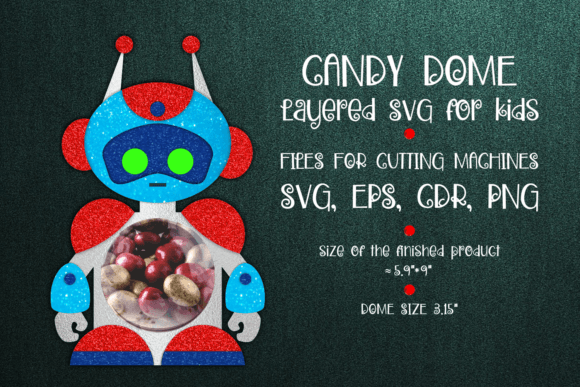
The visual personality of this digital product leans heavily into playfulness — the kind that appeals to families, children’s party planners, and makers who avoid overly saccharine Christmas themes. The robot figure has a slightly nostalgic vibe, reminiscent of tin toys, with a domed candy compartment that invites interaction. As a paper craft shape, the 3D SVG cuts produce crisp geometric panels that layer into a dimensional ornament. It’s the sort of design that would sit comfortably next to Scandinavian-inspired holiday décor or in a geek-craft section of a creative marketplace. I can see it attracting buyers who search for “nerdy Christmas decorations,” “robot paper craft,” or “funny gift tags” — niches where handmade sellers often find loyal audiences.
From a commercial design standpoint, the asset’s mood is neither overly childish nor sterile. It strikes a balance that lets it fit into a wide range of product types: a printable design for a card insert, a sublimation design transferred onto a mug, or a cut file tailored for cutting machines. Because it’s categorized under Shapes, the construction relies on clean-silhouette pieces rather than intricate illustrated details, which is exactly what crafters who use Cricut or Silhouette value most.
From Screen to Sold: Testing the Template on Real Products
In a realistic shop scenario, imagine you’re preparing a seasonal digital download collection for Etsy or Creative Fabrica. You’ve downloaded the Robot Candy Dome Paper Craft Template — a .zip with SVG, PNG, and possibly EPS or DXF formats — and you need to verify whether it can hold up across multiple product mockups before you write a single listing description. I always run assets through a simple three-step test: cut feasibility, visual clarity at thumbnail size, and versatility in a design bundle.
First, I opened the SVG design in a cutting software preview. The cut lines were intact, with no stray nodes or open paths that often plague cheaper craft files. Because the 3D SVG is composed of separate colored layers, it’s easy to assign scoring lines and cut lines, making it suitable for both print-then-cut stickers and full paper craft assembly. The PNG design — essential for those who just want to print a flat version — rendered at 300 DPI, which is the baseline for any professional printable design.
Next, I placed the assembled ornament shot onto a product mockup for a holiday greeting card. Even at 40% scale, the robot candy dome remains recognizable, thanks to its bold silhouette. That’s a key advantage of shape-based assets: they survive the shrink test that often kills overly detailed clipart. I also tested it as a potential t-shirt design mockup, pairing the graphic with simple serif and sans-serif font combinations, and it adapted well — the retro robot motif gave the apparel a niche, boutique feel rather than a discount-store vibe.
Finally, I imagined the file as part of a larger design bundle. The robot candy dome could easily sit alongside other Christmas paper ornaments, SVG shapes, or even Canva templates for quick social media graphics. For sellers who charge a premium for curated seasonal packs, an asset like this adds perceived value because it doesn’t look like a throwaway download; it feels intentional and well-drawn.
Where This 3D SVG Shape Shines in an Online Shop
In my experience, the strongest use cases for this graphic design asset cluster around physical and print-on-demand products that benefit from dimensionality. Here are the avenues where it performs best:
- Paper craft and DIY project listings: The primary purpose. Sellers can offer the template as a standalone digital download with photo instructions, or include it in a mega bundle of 3D paper ornaments. The cutting-machine file compatibility needs to be clearly advertised — SVG, DXF, and sometimes PNG for hand-cutting — so customers know they need appropriate software to work with these files.
- Seasonal greeting card designs: The robot holding a candy dome makes a charming front motif. Pair it with a script or handwritten font for a warm, homespun feel, or use a geometric sans-serif font to emphasize the modern craft angle.
- Print-on-demand merchandise: As a sublimation design, it transfers cleanly onto mugs, tumblers, and tote bags because the flat yet dimensional graphic doesn’t require heavy shading. The bright, opaque fills look crisp on white backgrounds and pastel base colors.
- Social media graphics and promotional visuals: Bloggers and small business owners who need December content can use the PNG version in Canva templates. A simple layout with the robot as the focal point and text overlay creates an engaging “Christmas countdown” post or shop announcement.
- Sticker sheets and planner embellishments: With slight resizing, the flat cutout pieces double as quirky sticker designs. Because the shapes are distinct, kiss-cut sticker sheets maintain a clean visual hierarchy, even when printed small.
Cautions Before You List: What to Double-Check
No asset is universally perfect, and honest testing means flagging where this 3D SVG shape could trip up a seller. The most critical point: the file set is structured for cutting machines. If you’re marketing it solely as a printable wall art or a sublimation design without providing cutting files, you might confuse a customer who expects layered SVG cut lines. Always preview the listing images with realistic expectations — a busy thumbnail can hide the fact that some buyers will need to know how to score, fold, and glue. That’s not a flaw, but it’s a communication requirement.
Here are the specific spots where you should be careful:
- Tiny sticker applications: The robot’s smaller details, like the candy bits inside the dome or the antenna, can become muddy when scaled below 1.5 inches for sticker designs. Test print at actual size before adding “sticker sets” to your product description.
- Dark backgrounds: The original design relies on light, cheerful colors. On a black or dark navy background, the robot’s body may lose definition. If you offer a dark-mode version in your digital download, you’ll need to adjust the fills manually.
- Overcrowded bundle previews: If you pile ten different paper craft characters into one mockup, each loses impact. Let the robot candy dome breathe in its own dedicated preview image, especially as the main Etsy product photo.
- Complex text-heavy layouts: Because the shape is moderately detailed, layering long text directly over the ornament can create visual noise. Use the graphic as a side element rather than a background in packaging design or blog graphics.
- Software assumptions: Remind buyers that they must have the appropriate software to work with these file types — a note I now include in every description after one too many “it won’t open in Word” messages. A short instruction card as a bonus PDF goes a long way toward reducing customer service friction.
Seller’s Workflow: How I’d Package This for Maximum Appeal
If this Robot Candy Dome Paper Craft Template were entering my own shop tomorrow, I’d follow a concrete workflow to transform it from a downloaded folder into a polished, commercial digital product. Here’s what a typical preparation sequence looks like for a Cricut project or SVG design:
- File clean-up and organization: Rename the files clearly — “RobotCandyDome_SVG_3D,” “RobotCandyDome_PNG_HighRes,” etc. Create subfolders if multiple formats are included. Customers appreciate a tidy zip, and it reflects well on your small business branding.
- Mockup creation: Photograph or use digital product mockups to show the assembled ornament, the flat cut pieces, and lifestyle shots. Good mockups increase click-through potential and let shoppers instantly grasp what they’re buying. For a 3D SVG shape, show at least one angled view to emphasize dimensionality.
- Thumbnail testing: Shrink your main listing image to 300px wide. Does the robot candy dome still read as a robot? If the dome melts into the background, add a subtle stroke or a contrasting backdrop. For a hands-on craft, a brightly lit photo against a neutral surface often outperforms heavily edited studio mockups.
- Font pairing for cover graphics: I’d test the title “Robot Candy Dome” in a clean display font, then in a rounded handwritten font to see which aligns better with the playful mood. A serif font can add an unexpected vintage twist, while a sans-serif keeps it modern. The key is consistency with your store’s visual identity.
- Commercial license verification: Before listing anything for sale, confirm that the included license permits physical end products, print-on-demand use, and digital resale in flattened formats. If there are any restrictions, I either adapt the product type or reach out to the original designer. For Etsy sellers and creative entrepreneurs, running afoul of licensing terms is a risk that’s entirely avoidable with a quick read.
- Test print and assembly: For a paper craft template, nothing beats hands-on assembly. Print on 65lb cardstock, cut on a Cricut, and build the ornament. Not only does this reveal potential cutting issues (like thin tabs that tear), but it gives you genuine tutorial material — behind-the-scenes photos, video clips, or a simple step-by-step that adds value beyond the bare files. That extra effort often justifies a higher price point.
The Value of a Distinctive Shape in a Crowded Market
As design assets flood every creative marketplace, the ones that perform well aren’t necessarily the most complex. A clear, well-cut 3D SVG shape with an original theme — in this case, a whimsical robot guarding a candy dome — cuts through the visual noise. It offers a stronger perceived value than the hundredth “Merry Christmas” clipart because it’s immediately usable across multiple product types: a mug design for a print-on-demand order, a sticker for a handmade business’s packaging, a social media graphic for a content creator’s December campaign, or a standalone Etsy product for crafters who collect unique ornaments.
I also note how this asset supports brand identity building. If your shop specializes in retro sci-fi or quirky holiday paper craft, the robot candy dome becomes a consistent visual thread that makes your collection look intentional. Group it with a few space-themed Christmas trees, a rocket ship ornament, and a satellite gift box, and you’ve suddenly got a niche design bundle that no competitor has duplicated yet. Buyers seek out small business branding coherence, whether they realize it or not, and a cohesive pack of Shapes like these does the heavy lifting for them.
Final Seller’s Notes on the Robot Candy Dome Paper Craft Template
After a thorough round of testing and mockup placement, I’d confidently slot this digital product into a holiday lineup. It won’t work for every product format — I’d avoid tiny jewelry tags or ultra-minimalist poster designs — but for the majority of printed goods, crafting projects, and pod applications, it’s a solid addition. The 3D SVG shape offers clean cut paths, a memorable theme, and enough flexibility to adapt to both fun children’s décor and more stylized adult holiday trinkets. For sellers who take the time to test it on their own materials, photograph the finished piece, and write clear software requirements, it can easily become one of those steady seasonal performers rather than a one-hit-wonder download.
As always with any commercial design purchase, treat it as a raw ingredient. Run it through your own workflow, pair it with your shop’s personality, and never skip the physical test print when dimensional assembly is involved. In a world of generic clipart overload, this robot candy dome template lands with enough charm and structural clarity to be worth the effort.